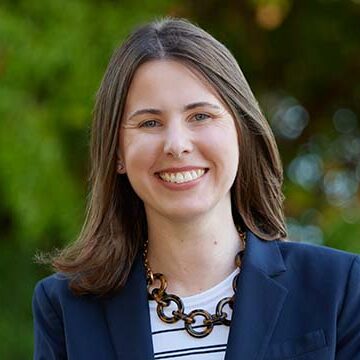
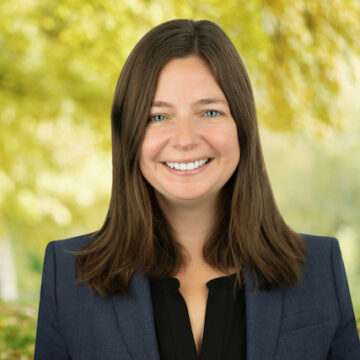
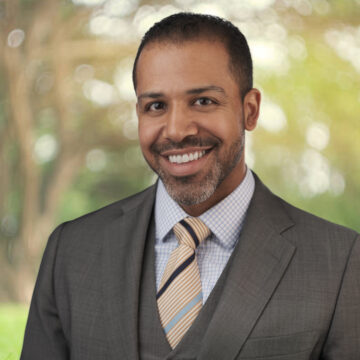
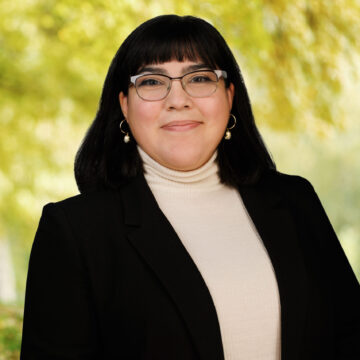
EPIC Board and Staff
EPIC Board of Directors
Marc Rotenberg, President [bio]
Deborah Hurley, Chair [bio]
Edward G. Viltz, Treasurer [bio]
Anita L. Allen, Secretary [bio]
Whitfield Diffie [bio]
Charlie Firestone[bio]
Philip Friedman [bio]
Mary Minow [bio]
Pablo Molina [bio]
Peter Neumann [bio]
Deborah Peel [bio]
Bruce Schneier [bio]
EPIC Staff
Marc Rotenberg, EPIC Executive Director, [Mailbox], 202.483.1140 x106
Marc Rotenberg is Executive Director of the Electronic Privacy Information Center (EPIC) in Washington, DC. He teaches information privacy law at Georgetown University Law Center and has testified before Congress on many issues, including access to information, encryption policy, consumer protection, computer security, and communications privacy. He testified before the 9-11 Commission on "Security and Liberty: Protecting Privacy, Preventing Terrorism." He has served on several national and international advisory panels, including the expert panels on Cryptography Policy and Computer Security for the OECD, the Legal Experts on Cyberspace Law for UNESCO, and the Countering Spam program of the ITU. He chairs the ABA Committee on Privacy and Information Protection. He is a founding board member and former Chair of the Public Interest Registry, which manages the .ORG domain. He is editor of "The Privacy Law Sourcebook" and co-editor (with Daniel J. Solove and Paul Schwartz) of "Information Privacy Law" (Aspen Publishing 2006). He is a graduate of Harvard College and Stanford Law School. He served as Counsel to Senator Patrick J. Leahy on the Senate Judiciary Committee after graduation from law school. He is the recipient of several awards, including the World Technology Award in Law.
Lillie Coney, EPIC Associate Director [Mailbox], 202.483.1140 x111
Lillie Coney is Associate Director with the Electronic Privacy Information Center (EPIC) in Washington, DC. Ms. Coney joined EPIC in 2004 to head up the organization’s voting and privacy project, and in 2005, she was named Associate Director.
Her work encompasses original research and writing on topics that impact civic participation. In 2004, she contributed the chapter “Mobilize Underrepresented Voters,” to the New York Times Bestseller, 50 Ways to Love Your Country. In 2005, she co-authored, along with computing technologists and researchers, the paper, Toward a Privacy Measurement Criterion for Voting Systems. In 2006, Ms. Coney was the organizing force behind the first research conducted in a polling location to measure the usability of optical-scan and touch screen voting systems resulted in the report, Voting Technology, Election Administration, and Voter Performance, published by Stein, Vonnahme, Byrne, and Wallach (2008). In October 2008, EPIC’s voting project published E-Deceptive Campaign Practices Report: Internet Technology and Democracy 2.0, the first report to review technology as a tool for online deceptive campaign practices. The report reviewed the potential for abuse of Internet technology in an election context, and made recommendations on steps that could be taken by Election Protection, Election Administrators, and voters to protect the integrity of the upcoming election. She has written and spoken extensively on the subject of voting technology and privacy. She has published several law and policy journal articles on elections and voting systems. [More].
John Verdi, EPIC Senior Counsel, Director, Open Government Project [Mailbox] 202.483.1140 x104
John Verdi is EPIC Senior Counsel and the Director of EPIC's Open Government Project. His work focuses on legal issues relating to open government, consumer privacy, and digital security. He litigates EPIC's freedom of information lawsuits against federal agencies and state governments. He is co-author of several federal amicus curiae briefs concerning electronic privacy. He is co-editor of Litigation Under the Federal Open Government Laws 2008, and speaks on consumer privacy issues in a variety of venues, including academic conferences and in the media.
Prior to joining EPIC, Mr. Verdi was a civil litigation associate in Washington D.C. His litigation experience includes matters relating to federal and state open records statutes, Administrative Procedure Act claims regarding federal oversight, and tort cases involving digital information misappropriation and misuse. Prior to his career as a lawyer, Mr. Verdi worked as a computer programmer on a variety of projects, including several applications involving secure financial data. He also advised the National Hockey League on a host of technology issues, including data collection as it relates to the Children's Online Privacy Protection Act. He is a graduate of Harvard Law School, and earned his BA in Philosophy, Politics, and Law at Binghamton University. He is a member of the District of Columbia and New Jersey bars.
Katitza Rodríguez Pereda, Director, EPIC International Privacy Project [Mailbox] 202.483.1140 x204
Katitza Rodríguez is Director of EPIC´s International Privacy Program. She concentrates on comparative international policy and legal aspects of privacy and data protection, international transfer of personal data and privacy global standards. She is Research Director for EPIC "Privacy and Human Rights Report (PHR) 2008" (forthcoming), the most comprehensive survey of privacy laws and developments in the world. She was also Research Editor of the Latin American Reports in the 2005 and 2006 editions of PHR. She participates and monitors the work of several organizations on international privacy discussions, including the OECD, the Privacy Sub-Group of the Asia Pacific Economic Cooperation (APEC), the United Nations Internet Governance Forum (IGF), the Data Protection Commissioner Meeting and the Ibero-American Data Protection Network.
Katitza is also coordinator of The Public Voice Coalition. She was responsible for facilitating the participation of Civil Society Participants of The Public Voice Coalition in the Organisation for Economic Co-operation and Development (OECD) Ministerial Meeting in Seoul, Korea as well as the organization of the OECD Civil Society Forum. This effort resulted in the creation of the Civil Society Information Society Advisory Council (CSISAC), a landmark achievement for civil society at the OECD. The Public Voice Project will serves as the initial point of contact with the OECD Committee for Information, Computer and Communications Policy (ICCP) and is responsible for facilitating CSISAC participation in the OECD from 2009-2010. Read more
Gerald Tan, Administrative Coordinator
Gerald Tan is the Administrative Coordinator for EPIC. He manages EPIC's award winning web site. His responsibilities include office services, the EPIC bookstore, shipping, and special projects. Mr. Tan graduated from the University of California, Irvine with a B.A. in Political Science and Economics, with honors. During his time there, he was also a member of the Law Forum Pre-Law program, Pi Sigma Alpha political science honor society, Phi Alpha Delta pre-law fraternity, and the Anteater Pep Band. He has gained valuable experience working in the California State Assembly, the UC Government Relations Office, and Rep. Charles Wilson (OH 6).
Ginger McCall, EPIC Staff Counsel
Ginger McCall is Staff Counsel at EPIC, where she works on EPIC's litigation matters, including amicus curiae briefs, open records requests, and national security matters. Ms. McCall is a graduate of Cornell Law School and graduated magna cum laude from the University of Pittsburgh with a B.A. in English Literature. While in law school, she was the head of the Cornell Law School National Lawyers Guild, helped to found the Cornell Law School National Security Law Society, was ranked as a semifinalist in Cornell Law School's Winter Cup moot court competition, and was a Cornell Judicial Codes Counselor (representing students before Cornell's academic and conduct hearing boards). Ms. McCall spent her first law school summer interning with the American Civil Liberties Union in Pittsburgh, PA and her second summer as a clerk with EPIC. While clerking with EPIC, Ms. McCall worked on projects involving a variety of privacy topics, including spyware protections, medical record privacy, and the Freedom of Information Act. Because of her work in civil rights, Ms. McCall was awarded the Freeman Prize for Civil and Human Rights by Cornell Law School.
Jared Kaprove, EPIC Domestic Surveillance Counsel
Jared Kaprove is a Fellow with EPIC in Washington D.C., focusing on Domestic Surveillance. His work at EPIC involves drafting amicus briefs and litigating Freedom of Information Act requests regarding domestic surveillance privacy issues, as well as analyzing the legal implications of government surveillance programs. He is a graduate of the University of Connecticut and the University of Virginia School of Law. While in law school, Jared focused on intellectual property issues and wrote on the FISA Amendments Act of 2008. He also worked as a research assistant for Professor Dotan Oliar studying the intersection of copyright and technology, and served as In Brief Development Editor for the Virginia Law Review.
Kimberly Nguyen, EPIC Consumer Privacy Counsel
Kimberly Nguyen is a Consumer Privacy Fellow with the Electronic Privacy Information Center in Washington, D.C. As an EPIC Fellow, she will identify emerging business practices that impact consumer privacy, develop recommendations for “best practices” concerning consumer privacy issues, and draft regulatory complaints for the FTC and FCC on consumer privacy issues. Kimberly graduated from Georgetown University with a B.A. in Psychology and received her J.D. from American University Washington College of Law. During her time in law school, she served as a staff member for the Administrative Law Review, taught Constitutional law to students at Cardozo High School as part of the Marshall-Brennan Constitutional Literacy Program, and worked as a student attorney for the Glushko-Samuelson Intellectual Property Law Clinic. Through her coursework and clinical experience, she developed a strong interest in copyright and trademark law and internet privacy issues.
Matthew Phillips, EPIC Appellate Advocacy Counsel
Matthew Phillips is an Appellate Privacy Fellow with the Electronic Privacy Information Center (EPIC) in Washington, DC. His work focuses on amicus curiae briefs concerning electronic privacy and government surveillance issues that EPIC files in the Supreme Court, federal circuit courts, and select state appeals courts. He is a graduate of Georgetown University Law Center (J.D. 2009, magna cum laude) and the University of Florida (B.S. 2005, cum laude). As a law student, he was a research assistant for Professor David Cole, and assisted with litigation related to the civil liberties of suspected terrorists. As an RA he also conducted a comparative analysis of the British and American surveillance laws, among other research topics. He was a member of the American Criminal Law Review and published a Student Note on the topic of consent searches. He was also a member of the Georgetown Appellate Litigation Clinic, where he helped write briefs and prepare for oral argument for a case before the D.C. Circuit. Last summer he worked as a summer associate for Arnold & Porter, LLP, where he intends to return as an associate following his fellowship with EPIC.
Anirban Sen, Paul Simons Fellow [Mailbox]
Anirban Sen is an EPIC Fellow. Anirban completed his Master's degree in Intellectual Property Law from The George Washington University Law School, prior to which he practiced law as a litigator in India, mainly before The Calcutta High Court. Anirban's practice focused on a host of topics including Constitutional issues, Administrative Law, Intellectual Property Law, Customs and Excise, Securitization and Contracts. He is a member of the New York State bar.
Caitriona Fitzgerald, Technology Fellow
Caitriona Fitzgerald is a Technology Fellow with the Electronic Privacy Information Center based in Boston, Massachusetts. Her work focuses on the Privacy '08 project, raising awareness among candidates and informing voters on privacy issues, as well as on improving EPIC's web presence. She is a graduate of Northeastern University School of Law, earned her bachelor's degree in Computer Science at the State University of New York at Geneseo, and is a former EPIC clerk. She is a member of the Massachusetts bar.
Simon Davies, Senior Fellow [Mailbox]
Simon Davies is an EPIC Senior Fellow and the founder and director of Privacy International, a London-based human rights group formed in 1990 as a watchdog on surveillance and privacy invasions by governments and corporations. He is also a Visiting Fellow at the London School of Economics, where he helped direct the research on a landmark report on national identification. Simon Davies is a leading authority on privacy and the impact of technology on society and the individual and the author of numerous books and articles.
Harry Hammitt, Senior Fellow
Harry Hammitt is editor and publisher of Access Reports, a biweekly newsletter on the Freedom of Information Act and open government laws and policies. He also edits Canada and Abroad, a monthly newsletter covering access and privacy issues in Canada.
He has written and lectured extensively on access and privacy issues in both the United States and Canada. He is a past president of the American Society of Access Professionals and currently serves on its board. He also serves on the board of the Virginia Coalition for Open Government. He was inducted into the FOI Hall of Fame at the Freedom Forum in Arlington, Virginia, in 2001.
EPIC Internet Public Interest Opportunities Program Clerks
2009
Heather Brondi, State University of New York at Buffalo Law School
Michael Eger, George Washington University Law School
Lia Ernst, University of Michigan Law School
Colin Irwin, UCC
Nicholas Janney, University of Miami Law School
Mark Perry, University of Illinois College of Law
Nichole Rustin-Paschal, University of Virginia School of Law
Amie Stepanovich, New York Law School
Chris Suarez, Yale Law School
Trent Taylor, George Washington University Law School
Richard Chang, Duke Law School
Nicole van der Meulen, Universiteit van Tilburg
2008
Cynthia Aoki, University of Ottawa School of Law
Katie Black, University of Ottawa School of Law
Kimberly Freeman, Thurgood Marshall School of Law
Andrew Gradman, Columbia Law School
Greg Grossmeier, University of Michigan
Sai Cheong Lui, University of Wisconsin- Madison
Ginger McCall, Cornell Law School
Benjy Messner, Youth Privacy Fellow
Maria Murphy, University of College Cork, Ireland
Meghan Murtha, University of Ottawa School of Law
Scott Nakama, Case Western Reserve School of Law
Danielle Nasr, University of Texas School of Law
Byron Thom, University of Ottawa School of Law
Sobia Virk, McGill University Faculty of Law
2007
Tanith Balaban, Case Western Reserve Law School
Jonathan David, Northeastern University School of Law
Caitriona Fitzgerald, Northeastern University School of Law
Harley Geiger, University of Missouri-Columbia School of Law
Jeremy Hessing-Lewis, University of Ottawa School of Law
Evan Mayor, George Washington School of Law
Jena McGill, University of Ottawa School of Law
Mark Pike, William and Mary School of Law
Jennifer Shyu, University of San Diego
Ravinder Singh, University of Ottawa School of Law
Evan Stern, Georgetown University Law Center
Felix Tang, University of Ottawa School of Law
Timothy Vollmer, University of Michigan
Aleah Yung, Georgetown University Law Center
2006
Courtney Barclay, University of Florida College of Law
Natalie Bellefeuille, University of Ottawa School of Law
Kim Fielding, Duke University Law School
Andrew Huzar, University of Ottawa School of Law
Angela Long, University of Ottawa School of Law
Jennifer O'Sullivan, University College Cork
Josh Parker, Duke University
D. Richard Rasmussen, University of Wisconsin Law School
Anthony Ritz, Georgetown University Law Center
Jay Goodman Tamboli, Georgetown University Law Center
Sunni Yuen, University of Pennsylvania Law School
2005
Jennifer Barrigar, University of Ottawa School of Law
Michael Capiro, University of Dayton School of Law
Charles Duan, Harvard Law School
Amina Fazlullah, University of Minnesota Law School
Louisa Garib, University of Ottawa School of Law
Michelle Gordon, University of Ottawa School of Law
Anthony Gray, University of Wisconsin School of Law (EPIC West)
Rakeim Hadley, University of Tennessee College of Law
Emily Honig, Colby College
Olive Huang, Boalt Hall School of Law (EPIC West)
Kristina Irion, The Martin - Luther - University of Halle
Dhruv Kapadia, University of Virginia
Robert King, Georgetown University Law Center
Carole Lucock, University of Ottawa School of Law
Ibrahim Moiz, Howard University School of Law
Catherine Ó Súilleabháin, Georgetown University Law Center
Yong Jin Park, University of Michigan
Leila Pourtavaf, University of Ottawa School of Law
Tori Praul, Boalt Hall School of Law (EPIC West)
Guilherme Roschke, George Washington University School of Law
Jessica Shannon, Georgetown University Law Center
Kathryn Sheely, Louisiana State University Law Center
Nerisha Singh, Exeter College, University of Oxford
2004
Elizabeth Austern, George Washington University Law School
Alex Cameron, University of Ottawa School of Law
John Doe, Harvard Law
Kenneth Farrall, Annenberg School for Communication, University of Pennsylvania
Denise Golumbaski, American University Washington College of Law
Neal Hartzog, George Washington University Law School
Paul Jones, Northeastern University School of Law
Samantha Liskow, Columbia University School of Law
Dina Mashayekhi, University of Ottawa School of Law
Alexandra Minoff, Georgetown University Law Center
Patrick Mueller, University of Wisconsin School of Law
Katherine Oyama, Boalt Hall School of Law
Olumide Owoo, Columbia University School of Law
Amanda Reid, University of Florida School of Law
Tara Wheatland, Boalt Hall School of Law
Angela White, American University Washington College of Law
2003
Ruchika Agrawal, Stanford University
Doug Barnes, University of Texas School of Law
John Baggaley, University of Wisconsin School of Law
Erik Blum, Brooklyn Law School
Jane Doe, American University Washington College of Law
Munged Dolah, Brooklyn Law School
Eva Gutierrez, University of Pennsylvania School of Law
Micheal O Dowd, University College Cork
Milana Homsi, University of Ottawa School of Law
Waseem Karim, Washington University School of Law
David Levin, Barrie School (Montgomery County, MD)
Sara Rose, Georgetown University Law Center
Christian Schroeder, University of Kiel
Sherwin Siy, Boalt Hall School of Law
Kerry Smith, Northeastern University School of Law
Tiffany Stedman, George Washington University Law School
Elizabeth Tockman, American University Washington College of Law
Mike Trinh, Georgetown University Law Center
Maryam Zafar, University of Maryland School of Law
2002
Nicole Anastasopoulos, University of Toronto
Lauren Collins, University of Michigan
Will DeVries, Boalt Hall School of Law
Marcia Hofmann, University of Dayton School of Law
Adam Kessel, Northeastern University School of Law
Mihir Kshirsagar, Harvard College
Dwayne Nelson, Georgetown University Law Center
Rossa McMahon, University College Cork
Alex Macoun, Duke Law School / University of Sydney
Carla Meninsky, George Washington School of Law
Nathan Mitchler, American University Washington College of Law
Jane Doe, Catholic University School of Law
Jane Doe, Georgetown University Law Center
Rob Swanson, Catholic University School of Law
Jason Young, Queen's University / University of Ottawa
2001
Jane Doe, City University of New York School of Law
Greg Kahn, Boalt Hall School of Law
Richard Holland, University of Wisconsin School of Law (Kennan Peck Fellow)
Erika McCallister, Wake Forest University School of Law
Gary Schneider, Whittier School of Law
Roia Shefayee, Santa Clara University School of Law / Johns Hopkins University
Jason Sonoda, Boalt Hall School of Law
Maureen Thorson, Georgetown University Law Center
Jane Doe, National University of Ireland, Cork
John Doe, Harvard Law School