Updates
New Jersey Court Rules State Must Disclose Facial Recognition Use in Criminal Cases
June 24, 2026
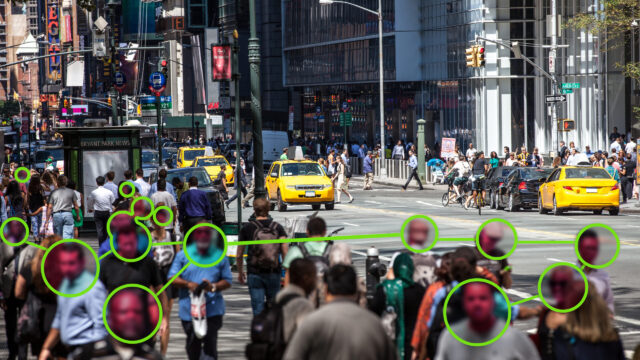
On Wednesday, the New Jersey Supreme Court unanimously ruled that in criminal cases, the state must disclose any use of facial recognition tech (FRT) in its investigation and how it was leveraged to prosecute the defendant.
EPIC partnered with the Electronic Frontier Foundation and the National Association of Criminal Defense Lawyers to file an amicus brief in the case in 2025, informing the court about the prevalence of FRT errors, the technology’s potential for bias, and the harms such externalities have already caused.
“Although we reject a rigid checklist for FRT discovery, we note that such basic information will, in most cases, constitute the minimum necessary to safeguard a defendant’s right to a fair trial,” Justice Douglas M. Fasciale wrote in his opinion, agreeing with what EPIC and its partners argued in the amicus brief. Judge Fasciale noted that the amicus brief provided “important and helpful information about how most FRT systems work.”
The ruling comes in State v. Miles, a case regarding the 2021 killing of Ahmad McPherson for which Tybear Miles was prosecuted. New Jersey law enforcement used facial recognition technology to identify Tybear Miles as a suspect in a 2021 homicide investigation and charged him with first-degree murder.
Miles sought discovery on the details of the search and the technology used, so he and his attorney could form arguments about whether it was likely to be accurate. Relying on New Jersey precedent established in New Jersey v. Arteaga, the trial court granted discovery. After an appellate court affirmed the trial court’s decision, the State appealed to the New Jersey Supreme Court.
EPIC applauds the decision’s commitment to transparency and accountability for New Jersey residents. FRT can easily be abused, and it’s crucial that defendants and the public understand how law enforcement is leveraging this technology. EPIC regularly files amicus briefs and advocates to ban the use ofFRT by law enforcement.

Support Our Work
EPIC's work is funded by the support of individuals like you, who allow us to continue to protect privacy, open government, and democratic values in the information age.
Donate