Analysis
In New Jersey, Fair Trials Demand Facial Recognition Disclosure. What About the Rest of Us?
August 26, 2026 |
This past June, the New Jersey Supreme Court announced in State v. Miles that the state must disclose any use of facial recognition in its investigation and provide information about how the technology was leveraged to prosecute the defendant. The court, agreeing with an amicus brief EPIC submitted with the Electronic Frontier Foundation and the National Association of Criminal Defense Lawyers, decided that some discovery into facial recognition technology is not optional, but “necessary to safeguard a defendant’s right to a fair trial.”
The court’s decision is a critical one. The constitution protects a criminal defendant’s rights to a fair trial and due process, including access to the information and evidence used in an investigation against them. However, courts have been slow to protect these rights when algorithms come into play, risking individuals’ fundamental rights and liberty and leaving defendants, their attorneys, and the public in the dark. To correct this imbalance, courts and legislators should expand on the New Jersey Supreme Court’s important decision.
Police are increasingly using facial recognition to conduct investigations.
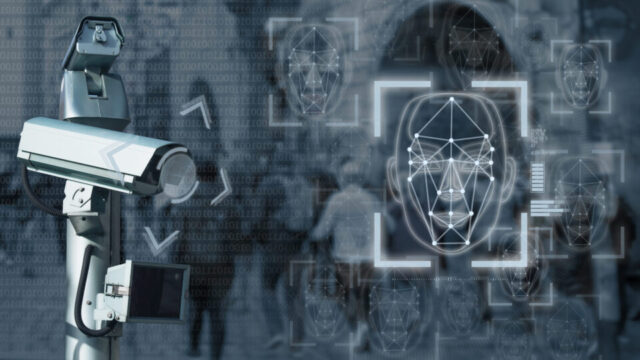
Law enforcement across the U.S. have rapidly adopted and deployed facial recognition with little guardrails around its use. From 2010 to 2016, over 2,800 arrests were made based on facial recognition. In 2018 alone, facial recognition was used in over 8,000 cases. It usually works like this: police feed a photo of a suspect into a facial recognition algorithm that compares that photo to a large database of photos whose identities are known. This is known as 1:N, or one-to-many face recognition. The algorithm then returns a list of individuals (known as a “candidate list”) that potentially match the person in the source photo. The candidate list is typically accompanied by a score of how confident the algorithm is that the identified person is the person in the photo. Law enforcement then uses this list to identify individuals to investigate and arrest.
Facial recognition technology provides a unique risk of error, entrenches existing bias in the criminal justice system, and increases over-policing.
The use of facial recognition technology involves multiple different steps, providing many points for inaccuracy, bias, and mistakes to influence the algorithm’s candidate list. As EPIC’s brief highlights, “[e]very facial recognition search is different. The number of components required to make up each facial recognition search vary drastically from agency to agency and case to case.” Errors may be introduced at each stage of use, increasing the likelihood that the facial recognition technology provides false identifications to law enforcement officers. Officers can 1) chose a photo that is low-quality (and so harder for the algorithm to process); 2) edit a suspect photo prior to the search; 3) select a database to search for matches that over-includes people of color; 4) use a system that was designed and trained on biased data; and 5) over-rely on the recommendations made from facial recognition tools, even when match recommendations clearly don’t resemble the suspect (such as not having the same piercings or tattoos). Each of these steps can create new risks of bias and misidentification for each facial recognition search conducted by law enforcement, casting critical doubt on an investigation that relies on the technology to identify the defendant.
However, the technology getting more accurate does not solve the underlying problems related to facial recognition. Despite the promises from AI companies that algorithms will eliminate bias, studies continue to show that AI instead entrenches and supercharges existing biases. When facial recognition algorithms are trained on decades of biased data related to policing trends and arresting rates, it is not surprising that the outcomes will mimic the known discriminatory outcomes of our country’s criminal justice system. Ultimately, any development of any sort of artificially powered technology, such as facial recognition, is going to include human bias and errors.
Additionally, facial recognition technology is extremely invasive and leads to increased surveillance in already over-policed communities. A review of the technology’s use in New Orleans found that it had “low effectiveness, [was] rarely associated with arrests and [was] disproportionately used on Black people.” In the 15 requests for a facial recognition match over the course of a year, 14 of the suspects were Black. Similarly, in Detroit, officers used the technology to identify 68 Black suspects and only 1 white suspect. And a study of New York Police Department’s facial recognition surveillance cameras discovered that they were disproportionately deployed in majority-Black and Brown communities. Not only does this increase law enforcement encounters for community members, but the use of surveillance technologies like facial recognition may also chill speech. Studies show that when individuals know, or even suspect, they are being surveilled by the government, they are less likely to participate in First Amendment-protected activities, such as protests. Over-policing has significant consequences for local community members, and facial recognition is just another tool used to expand police presence in already over-targeted communities.
Facial recognition use has already led to significant harm.
Because of the error-prone nature and inherent dangers of using facial recognition, police have falsely arrested individuals. These arrests derail lives. Individuals may face jail time, lose their jobs, or experience health issues. Robert Williams, one of the first known individuals falsely arrested based on facial recognition, has experienced multiple strokes since his arrest. Porcha Woodruff experienced pregnancy complications after she was arrested due to a false match. Michael Oliver lost his job painting car parts. He told reporters that it “took about a year for his life to return to normal.” In one case in New Jersey, Nijeer Parks spent ten days in jail and waited almost a year for a case based on a false facial recognition match to be dropped. The entire experience caused Parks to consider taking a plea deal, even though he was innocent. According to public defenders, this is common with individuals who are arrested, especially those who face potentially long prison sentences. As of publication, there are fourteen people publicly known to have been wrongfully arrested due to false facial recognition matches. Each of these individuals named here that were falsely arrested based on facial recognition technology (and, indeed, the majority of false arrests based on facial recognition) is Black.
Access to facial recognition information is required for a fair trial.
Despite the known risks of facial recognition use, defendants do not always know when facial recognition was used during an investigation, making it extremely difficult to challenge. Since there is no set standard across the country on whether police are required to disclose the use of facial recognition, defendants typically rely on law enforcement voluntarily disclosing this information. Yet, police officers often fail to identify whether facial recognition was used during an investigation. Even then, officers are purposefully vague, stating that they identified the suspect through “investigative means” to obscure the use of technology. Despite this significant roadblock to the defendant’s constitutional right to understand the evidence against them, courts have denied discovery requests regarding whether facial recognition was used as “too speculative.”[i] This makes it incredibly challenging to discover its use.
Even when defendants know facial recognition tools have been used during an investigation, there has been a rise in law enforcement departments raising trade secret arguments, which, if granted, bar the defendant from accessing the information in discovery.[ii] From 2013 to 2018, courts in at least five states denied access to algorithmic information due to trade secrecy rights.[iii] In 2019, the New York Police Department used facial recognition to find a man who stole a pair of socks, but when the suspect tried to get information about the use of the technology, the prosecutors stated that providing it would violate trade secret protections. This is incredibly concerning because trade secret protections leave defendants without access to the very tool used to finger them as a suspect and prevents further avenues of inquiry of the technology.
The Supreme Court concluded decades ago that the Fifth Amendment requires defendants to have access to the evidence used against them in order to have a fair trial. Brady v. Maryland requires the prosecution, and the police, to turn over evidence that is “favorable,” as long as the evidence is “material” to the defendant’s case.[iv] A suppression of that evidence “violates due process,” which is protected under the Fifth Amendment of the U.S. Constitution. This right to access includes information that allows defendants to challenge the validity of the assumptions made by the police during the investigation and arrest, as well as evidence that could indicate third-party guilt. However, courts have not always extended this right to facial recognition use.[v]
While defendants generally have had successful Brady challenges in order to access DNA and fingerprint results, that is not always the case for facial recognition results.[vi] If individuals have access to information about the use of facial recognition technology, it makes it easier to challenge their use during trial. Some individuals have been successful in obtaining a pretrial hearing on the use of facial recognition technology as evidence.[vii] And one judge in Minnesota excluded the results of facial recognition because the algorithm does not “consistently produce accurate results.” But when courts have granted access, it is sometimes severely limited, like restricting discovery of evidence to just the matches produced by the facial recognition algorithm used by police in their investigation.[viii] Providing only small pieces of a puzzle does not allow a defendant to see the full picture and thus does not provide the evidence needed in order to obtain a fair trial.
If individuals cannot challenge the evidence that led to their arrest, it is inherently unfair and violates their constitutional rights. In Florida, police identified Willie Lynch as a potential drug dealer using facial recognition and arrested him. Yet during the trial, officers did not disclose the use of the technology to identify him as a suspect. Importantly, they also did not inform him that the system that identified him only provided a “one-star” confidence match that Lynch was the same person as the drug dealer. Lynch raised a Brady violation, but the Florida court rejected this argument because they stated Lynch did not show “a reasonable probability that the result of the trial would have been different if the suppressed evidence documents had been disclosed to the defense.” Lynch is still in jail, not having had the ability to ever challenge the information that led to his arrest. This is inherently unfair and a blatant violation of the requirements under Brady to ensure defendants receive a fair trial.
These decisions make the outcome in State v. Miles even more critical because it will provide that full picture to defendants (at least in New Jersey). The Miles decision explicitly ties a defendant’s constitutional right to a fair trial. The court stated that New Jersey must, at a minimum, “produce: (1) discovery identifying the [facial recognition] tools and materials the State used in its investigation; and (2) discovery related to how the State utilized those [facial recognition] tools and materials to prosecute defendant.” As the court explained, the first piece was relevant to “developing a record regarding the reliability of [facial recognition technology] in this case” and the second was relevant to “impeaching the interviewees’ identification, challenging the State’s investigation, and demonstrating potential third-party guilt.” As EPIC and our partners highlighted in our brief, without that information, a defendant “cannot truly understand the evidence against him or how law enforcement’s use of face recognition technology may have influenced the identification in this case. Thus, denying discovery would violate constitutional guarantees of due process.”
The public also has a right to access how law enforcement is using facial recognition technology.
Not only does the exposure of facial recognition systems protect the constitutional rights of individuals in their respective cases, this disclosure also creates transparency for the public about how law enforcement is using facial recognition. This can spark much-needed public accountability and debate about how we are policed and what place, if any, these technologies have in our public life. As stated in EPIC’s brief, “Disclosure is necessary to protect the constitutional right of the public and the press to access criminal judicial proceedings as ‘a presumption of openness inheres in the very nature of a criminal trial under our system of justice.’”[ix] While law enforcement would rather operate these technologies in secret, the public has a right to know how their tax dollars are being spent and how their rights may be impacted. Without this information, both lawmakers and the public are unable to fully participate in the democratic process in funding and regulating these tools.
The Miles decision was critical, but lawmakers, courts, and lawyers can do more to safeguard defendants’ constitutional rights.
Facial recognition technology ultimately threatens to violate privacy, entrench existing biases in the criminal justice system, and contribute to over-policing. That is why lawmakers should move to pass a ban on facial recognition use at all levels of government, including law enforcement, and limit biometric use in other contexts. Facial recognition is too powerful for police departments to use without abuse and harms to privacy and civil liberties. Many individuals have already been irreparably harmed. This harm will continue unless we act now. Many cities have already taken the step to prevent use of this invasive technology. However, local governments must continue to monitor their police departments to prevent workarounds that violate the bans.
Additionally, policymakers should pass restrictions on the use of biometric technology by private entities. Illinois’s Biometric Information Privacy Act has been a critical tool to hold companies accountable for misuse of biometric information and abuse of privacy rights. These restrictions should include strict data minimization standards, maximum transparency, and a private right of action to allow individuals to vindicate their rights. This not only provides individuals another avenue to secure their rights but creates safeguards against police use. Law enforcement departments have partnered closely with private facial recognition vendors and thus any private collection of biometric data can easily become part of an investigation. Data privacy rights ultimately help combat against government surveillance.
At minimum, lawmakers should ensure defendants receive a fair trial and pass targeted legislation to grant defendants the information and access to facial recognition technology used by police departments or other government agencies. For example, lawmakers could take inspiration from Idaho’s law that provides defendants with access to all documents, data, records, and information on pretrial risk assessment tools used. Importantly, the law prevents the use of trade secrets or other intellectual property claims to quash discovery requests about the technology.
Without legislative changes, law enforcement offices across the country will continue to adopt and integrate facial recognition tools into their investigations. That is why it is critical that lawyers challenge the use of facial recognition systems in court and bring to light the use of these technologies to the public. Lawyers should point courts toward Miles and ensure courts understand what Brady requires for a fair trial related to facial recognition use.
Courts should adopt the Miles framework, while going further to fix the proprietary information loophole. As discussed above, the rise in law enforcement claiming trade secret protections for any information related to facial recognition blocks defendants from getting the information they need for a fair trial. Trade secret protections for facial recognition obstruct a defendant’s ability to fight the underlying assumptions made in an arrest. Courts should recognize that access to even proprietary information about facial recognition is necessary in order to meet the requirements of Brady. Courts could also expand the scope of the Miles decision and explore the right of access through the Confrontation Clause, a Sixth Amendment protection which states a criminal defendant has a right to question witnesses testifying against them.
The right to a fair trial includes the right to access information about facial recognition use.
To ensure individuals receive a fair trial, they must have access to the information needed about facial recognition systems used by law enforcement and government agencies to define them as suspects. While the New Jersey Supreme Court’s decision in Miles was a strong step forward, there is still a long way to go to fully safeguard defendants’ constitutional rights. Given the privacy implications, potential for bias, and extremely harmful consequences, it is critical that individuals have full access to the information needed in order to challenge the use of facial recognition systems and meet Brady requirements. The era of secretive facial recognition technology use by law enforcement must come to an end.
The author would like to thank Abigail Kunkler and Jeramie Scott for their feedback and editing of this post.
[i] See People v. Clark, 2025 Mich. App. LEXIS 5768, 23 (1st District Court of Appeals Jul. 21, 2025).
[ii] See also Rebecca Wexler, Life, Liberty, and Trade Secrets: Intellectual Property in the Criminal Justice System, 70 STAN. L. REV. 1343, 1367 (2018) (“Police departments have cited trade secrets as reason to deny open records requests for face recognition user manuals and audit information.”).
[iii] See id. at 1362 n.80 (California, New York, Ohio, Pennsylvania, and Washington).
[iv] See Brady v. Maryland, 373 U.S. 83, 87 (1963).
[v] See Lynch v. State, 260 So. 3d 1166, 1169-70 (Fla. Dist. Ct. App. 2018) (declining to find a Brady violation where the prosecutor failed to disclose evidence about an algorithmic witness’s identification of different possible matches).
[vi] See Mitchell v. Sharp, No. 16-6258, 2019 U.S. App. LEXIS 36563, at *1-2 (10th Cir. 2019); Buffey v. Ballard, 782 S.E.2d 204, 221 (W. Va. 2015);
[vii] See People v. Gomez, Ind. No. 70498-2022 (Sup. Ct. NY 2022); and United States v. Turner (2022, New Jersey case).
[viii] See People v. Knight, 69 Misc. 3d 546 (Kings County Superior Court Sept. 2, 2020).
[ix] Richmond Newspapers v. Va., 448 U.S. 555, 573 (1980); see also Globe Newspaper Co. v. Superior Court, 457 U.S. 596, 606–07 (1982).
Support Our Work
EPIC's work is funded by the support of individuals like you, who allow us to continue to protect privacy, open government, and democratic values in the information age.
Donate