Updates
EPIC to NYC Council: Address the AI Harms Already Affecting New Yorkers
October 7, 2026
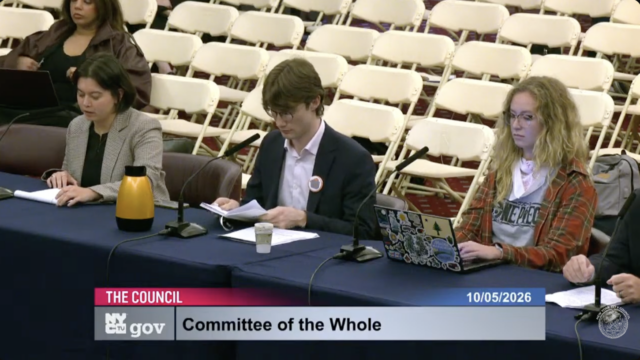
On Monday, Mayu Tobin-Miyaji, Counsel at EPIC, testified at New York City Council’s rare council-wide hearing on a series of bills to establish safeguards on artificial intelligence (AI).
A panel of whistleblowers from leading AI companies opened the hearing, highlighting various risks from AI systems and insufficient care demonstrated by the AI companies in testing for risks before deployment. These concerns take on greater urgency as AI companies push to build AI systems with wider impacts on privacy, security, and safety.
Representatives from AI companies Anthropic, Google, OpenAI, and Meta, also answered questions under oath. Although leadership of those companies loudly warn about their own AI systems causing catastrophic risk, none of the representatives present could quantify the likelihood of catastrophic risk nor confirm that they had liability insurance for catastrophic risk when asked by Speaker Menin. Speaker Menin and other councilmembers emphasized the importance of holding AI companies accountable for harms they cause instead of relying on self-regulation.
In addition to the whistleblowers and AI companies, NYC government leaders, civil society organizations, academics, and the public also testified across almost ten hours of testimony.
EPIC’s testimony urged the council to focus on holding AI companies accountable for real-world harms they are inflicting on New Yorkers today. Ms. Tobin-Miyaji noted, “there is no reason that AI companies should be allowed to release products they cannot control and then avoid liability.” She highlighted EPIC’s support for Intro 2599, a bill that would implement a local version of the People-First Chatbot Bill, which EPIC developed with Consumer Federation of America and Fairplay. This bill would treat AI chatbots as products for which developers are liable if they cause harm. She also indicated support for Intro 2600, which would also create clear liability for foreseeable harm caused by AI products with a private right of action.
EPIC has consistently advocated for stronger privacy protections from a wide range of AI harms, including automated decisionmaking systems that affect consequential decisions, employer use of AI systems to engage in algorithmic unionbusting, and surveillance pricing practices.

Support Our Work
EPIC's work is funded by the support of individuals like you, who allow us to continue to protect privacy, open government, and democratic values in the information age.
Donate