Analysis
Project Dystopia: How a Little-Known Non-Profit Has New Orleans Considering Mass, Real-Time Facial Recognition Surveillance
July 31, 2025 |
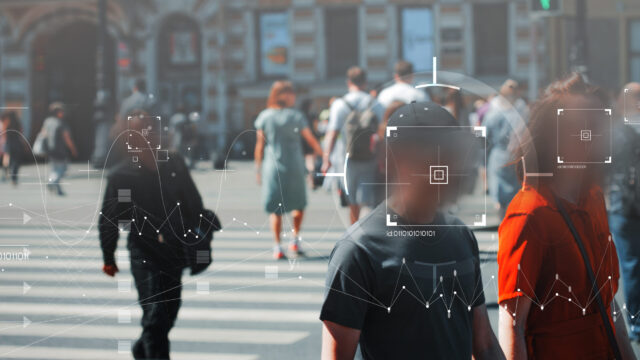
The New Orleans City Council is considering Ordinance 35,137 that would authorize the continued use of the live facial recognition system implemented by Project NOLA. Project NOLA, a non-profit organization, runs a centralized surveillance system that has equipped New Orleans with more than 200 facial recognition cameras at various establishments and residential locations. The program, run by a former officer, was until recently, sending law enforcement live, real time alerts of people identified by facial recognition from predetermined lists. The use of Project NOLA’s live facial recognition system by the New Orleans police was a clear violation of a preexisting 2022 city council ordinance that limited the use of facial recognition technology to searches involving specific cases with violent crime. The 2022 ordinance did not allow for the use of live facial recognition or the mass deployment of the technology. Despite the police’s clear violation of the ordinance, the New Orleans City Council is considering a new ordinance to sanction the mass deployment of live facial recognition.
The possibility that New Orleans will officially implement mass surveillance via facial recognition would be an about-face that would see New Orleans go from a 2020 ordinance that rightly banned facial recognition because of the heightened risk of false positives for Black people to embracing a dystopian future of a dragnet facial recognition surveillance that treats everyone as a suspect. This opens the door to a level of intrusion that we’ve only seen in authoritarian governments. The intrusion will not stop at our faces, Project NOLA can not only track faces, but also clothing, cars, and bikes. The kind of surveillance presents a real threat to our privacy, civil liberties, and undermines our democratic values.
Research shows that facial recognition technology yields higher rates of false positives for people of color. National Institute of Standards and Technology (NIST) tests showed higher rates of false positives for Asian and African American faces, with African American women seeing even higher rates. This technology has led to false arrests of African Americans due to misidentification — even by New Orleans police. A Georgia man, Randal Reid, was arrested across state lines after being misidentified by facial recognition technology. Despite never entering the state of Louisiana, he was jailed for nearly a week without bond and left uncertain of his future. In Detroit, Robert Julian-Borchak Williams — another Black man — was arrested for shoplifting based on a flawed match from a facial recognition algorithm. Mr. Williams had an alibi; however, Detroit police never inquired. In another Detroit case, Porcha Woodruff, a pregnant Black woman was falsely identified causing her to be stressed during her pregnancy. Black women suffer the highest maternal mortality rate in the country, mistakes such as these can not only be harmful but deadly.
The use of live FRT surveillance would make everyone a suspect and go against democratic values. This type of mass surveillance would undermine individual freedoms and citizens’ ability to freely engage in social and political activity. The European Court of Human Rights unanimously concluded that highly intrusive technology (e.g. real-time dragnet facial recognition surveillance) is incompatible with the ideals and values of a democratic society governed by the rule of law. Mass deployment of live facial recognition suppresses dissent and disproportionally targets marginalized groups. It prevents citizens from having the ability to congregate without the fear of being immediately identified and targeted. In fact, NYPD utilized facial recognition technology to track down a Black Lives Matter protester. This presents a glimpse of the threat live FRT surveillance could have on the ability to assemble and exercise our First Amendment rights.
It is not a coincident that countries with authoritarian governments — like Russia and China — implement the use of live facial recognition against their people. In Russia, Putin has utilized facial recognition technology to curb dissent and deployed it in other politically charged moments. More than 220,000 CCTV cameras were installed in the Moscow underground; all embedded with facial recognition technology. After participating in a political rally opposing Putin, a Russian photo blogger was identified by police using facial recognition technology from the Moscow metro. FRT surveillance has been used recurrently to identify protestors in Russia. Similarly, in China, live FRT has been used to surveil their minority Uighur Muslim population. Expansive camera surveillance in China constantly tracks and records people’s movements.
In contrast, there is a reason that various states and cities in the U.S. have imposed explicit bans or otherwise do not allow the use of mass indiscriminate live facial recognition surveillance. States like Maryland, Montana, Virgina, Utah, Maine, and Vermont have banned the use of indiscriminate, live facial recognition technology, recognizing the risks such technology poses. Sanctioning the indiscriminate use of live facial recognition would destroy the previous guardrails around this technology and would be the first major American city to specifically allow live facial recognition. The New Orleans police could not even follow modest restrictions on their use of facial recognition and secretly sidestepped those regulations. The response to these violations should not be to grant them more authority to use facial recognition. If anything, the response should be to reinstate the 2020 ordinance that bans New Orleans police’s use of facial recognition technology as they have shown the inability to follow minimal restrictions on the technology’s use. The mass deployment of live facial recognition is antithetical to democratic society and will be disproportionately deployed on people of color and lead to wrongful arrest of people with darker skin tones. The New Orleans City Council should reject Ordinance 35,137 and any other ordinance seeking to implement mass, real-time facial recognition.

Support Our Work
EPIC's work is funded by the support of individuals like you, who allow us to continue to protect privacy, open government, and democratic values in the information age.
Donate