Surveillance Pricing

Background
Businesses are increasingly engaging in surveillance pricing—using troves of personal data to set individualized prices. As a result, people are paying different amounts for the same exact product, just because businesses are better equipped to infer who will pay more. EPIC pushes for limits to this unfair practice that undermines consumer privacy and hurts consumers’ wallets.
Documents
What is surveillance pricing?
Consumers are increasingly aware that they are shown different, individualized prices for products and services like hotel rooms, Uber or Lyft rides, flights, or electronics. The culprit may be surveillance pricing, one of a variety of algorithmic pricing practices.
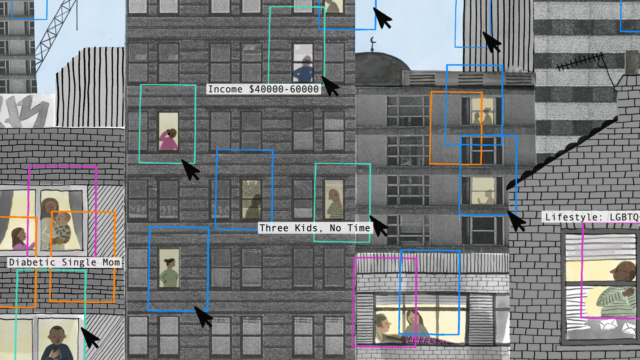
Surveillance pricing is the practice of collecting personal information about consumers and charging different prices to individual (or groups of) consumers for the same goods or services. The goal of surveillance pricing is to infer the highest price that the customer is willing to pay, based on consumers’ personal data and other market data. This can result in consumers shopping for the same exact product paying vastly different prices. For example, a recent investigation into Instacart found that its surveillance pricing algorithm could lead to $1,200 more spent on groceries each year for some consumers. This machinery for setting different prices may also be called “personalized pricing” or the broader term of “algorithmic pricing.”
The Federal Trade Commission launched a surveillance pricing study in July 2024 and released initial findings in January 2025. Among the study’s findings was that an algorithmic system could be used to collect real-time information about a person’s browsing and transaction history and enable a company to offer—or not offer—promotions based on that consumer’s perceived affinity for particular products. For example, a pharmacy could choose to exclude regular customers from a special promotion on over-the-counter medications or weight-loss supplements because the pharmacy inferred that those customers are likely to buy those products anyway. Instead, it may target discount codes to a group of infrequent buyers for these products who may be “at risk” of disengaging.
Loyalty programs and discounts are sometimes surveillance pricing in disguise
Loyalty programs oftentimes enable surveillance pricing. Loyalty programs collect vast amounts of data about consumers, including directly from customers using the loyalty program and supplementing the data from data brokers. Based on that data, businesses make inferences about those consumers’ likelihood of purchasing products at certain price levels, offer individualized prices, and profit from exploiting consumer data through selling insights.
Some businesses are also taking advantage of the consumer appeal of discounts to implement surveillance pricing. For example, instead of increasing prices for certain consumers, businesses may set an artificially high baseline price for products and then offer individualized discounts to certain consumers based on what the business guesses the consumer is willing to pay. Loyalty programs provide a convenient vehicle because businesses can infer which products a customer is already loyal to and only offer discounts to consumers who may be considering other options. In the end, consumers can end up paying different “discount” prices for the same product, allowing the business to use surveillance pricing to drive up consumer costs while appearing to offer discounts. Another twist to this practice is showing the same discount price, but showing different original prices, as Instacart was found to be doing. There, even though all customers ended up paying the same price, the different original prices gave some consumers the impression that they were getting bigger discounts, potentially manipulating their perception of the discount value and influencing their decision to purchase the product.
Harms of Surveillance Pricing
Surveillance pricing harms consumers in several ways. First, businesses can exploit personal data to charge some consumers more for the same exact product or service if the business infers that the consumer is willing to pay more. This undermines consumer expectations of fairness and can amount to violations of state consumer protection law. The price differences may also be discriminatory on the basis of protected characteristics, such as race and gender. Further, surveillance pricing is built on the mass data sharing of personal data through data brokers, and it incentivizes even more intrusive data collection to predict an individual consumer’s likelihood of purchasing products at certain price points. Consumers are categorized by data brokers that identify or infer characteristics such as age, demographics, shopping habits, lifestyle, or economic status. Such personal data collected for commercial purposes also often ends up in the hands of third parties, including law enforcement agencies, and is used for unrelated purposes. In sum, surveillance pricing and the mass data collection that fuels it undermine consumer privacy, autonomy to make purchasing decisions, and fair treatment of consumers.
Consumers don’t want surveillance pricing
Surveillance pricing is wildly unpopular with consumers. Consumer Reports has conducted a series of nationally representative surveys on the subject. One, administered in May 2024, found that 66% of Americans were opposed to the practice of online retailers selling the same goods and services at different prices depending on the buyer’s personal information. A January 2025 survey on surveillance pricing offering variable discounts based on personal data also showed that a majority of Americans oppose the practice. Specifically, 76% of Americans opposed companies offering discounts through their loyalty programs based in part on demographics such as age, income, race/ethnicity, where a person lives, and more, and 72% of Americans oppose basing discounts in part on online presence or behavior, such as the kind of devices or browsers they use, search history, past purchases, and more. We have also seen swift public backlash when Delta Airlines’ president said in an investor conference that the company was planning to deploy surveillance pricing, followed by the company backpedaling.
Recent developments and EPIC’s work
New York was the first state to pass a law relating to surveillance pricing. New York’s Algorithmic Pricing Disclosure Act went into effect July 8, 2025. The Act requires a business using surveillance pricing to clearly and conspicuously post a disclosure that states, “This price was set by an algorithm using your personal data.” The Act also prohibits the use of protected class data, such as ethnicity, national origin, age, disability, sex, sexual orientation, gender identity and expression, or pregnancy outcomes and reproductive healthcare, to set prices or discriminate among consumers.
EPIC filed an amicus brief in a case where the National Retail Federation sued to challenge New York’s law on a First Amendment basis. EPIC argued that New York’s law does not trigger heightened scrutiny under the First Amendment and serves a legitimate regulatory goal of protecting consumers. Though likely to ultimately fail, NRF’s First Amendment argument fits a disturbing trend of tech companies using First Amendment arguments to attempt to shirk regulation and accountability for harms they cause to consumers.
EPIC has also supported outright bans and substantive limitations on when companies can engage in surveillance pricing. For example, EPIC joined Consumer Watchdog, Consumer Federation of America, and Privacy Rights Clearinghouse in supporting California’s AB 446, which sought to prohibit surveillance pricing. EPIC has also testified on bills in Maryland and Colorado seeking to limit surveillance pricing practices and on a Massachusetts bill seeking to prohibit surveillance pricing based on biometric data.
Recent Documents on Surveillance Pricing
-
Testimony
Massachusetts: Testimony in Support of H.78/S.45/S.29/H.104, Massachusetts comprehensive data privacy bills
MA Joint Committee on Advanced Information Technology, the Internet and Cybersecurity
-
Testimony
(Oregon) Testimony on HB 3899
Top Updates
Resources
-
The Loyalty Trap: How Loyalty Programs Hook Us with Deals, Hack our Brains, and Hike Our Prices
Vanderbilt Policy Accelerator and UC Berkeley Center for Consumer Law and Economic Justice | 2025
-
Prohibiting Surveillance Prices and Wages
Towards Justice | 2025
-
Same Cart, Different Price: Instacart's Price Experiments Cost Families at Checkout
Groundwork Collaborative and Consumer Reports | 2026
-
FTC Surveillance Pricing 6(b) Study
Federal Trade Commission | 2025
EPIC's Experts on Surveillance Pricing
-

Thomas McBrien
EPIC Counsel
-

Caitriona Fitzgerald
Deputy Director and Policy Director
-

Mayu Tobin-Miyaji
EPIC Law Fellow